
The 159-page customer service workbook you didn't have to write
Forty-one classroom-ready activities for NCFE Unit 01 Customer service in travel and tourism (T/507/2655), built for learners who don't much like writing. One payment of £49 and your college can photocopy it for every student, every year, forever.
£49 — one payment, unlimited copies, no renewal
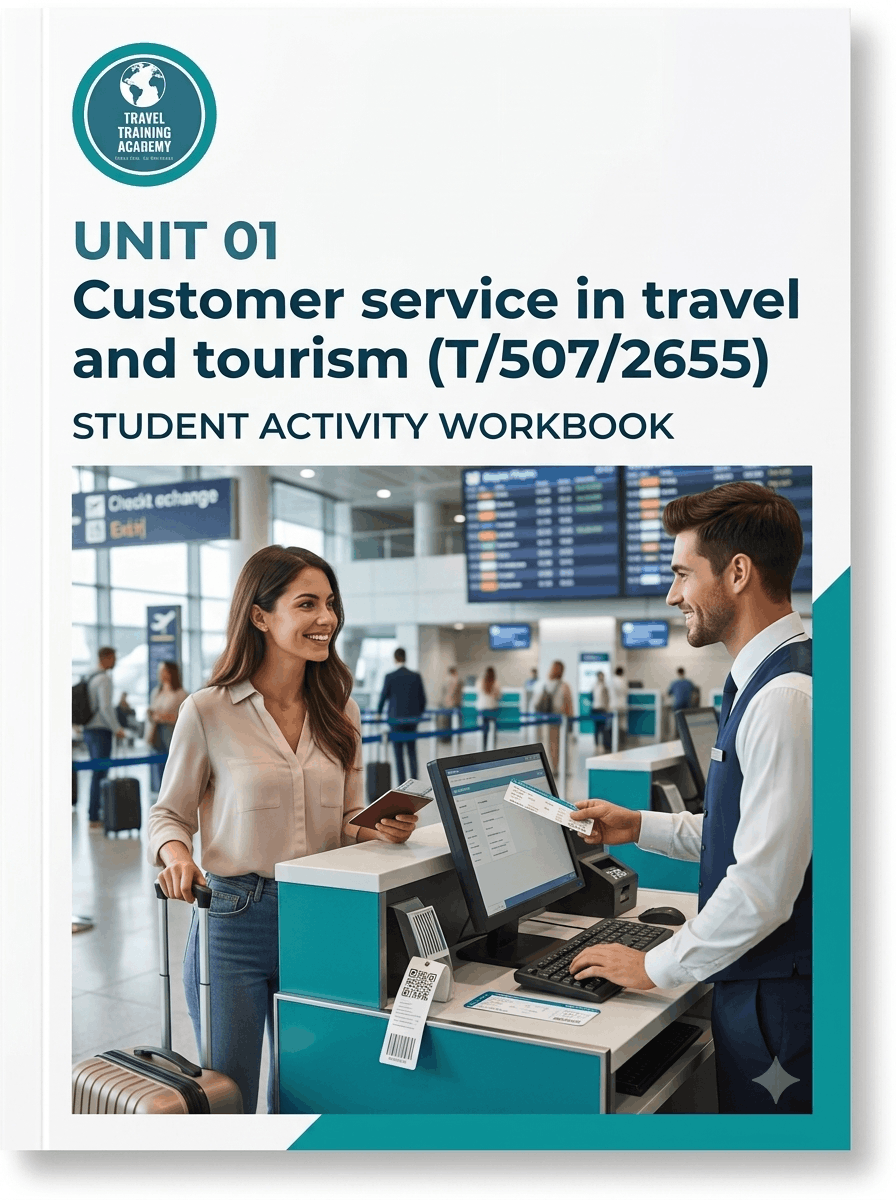
A workbook that supplements your existing teaching material
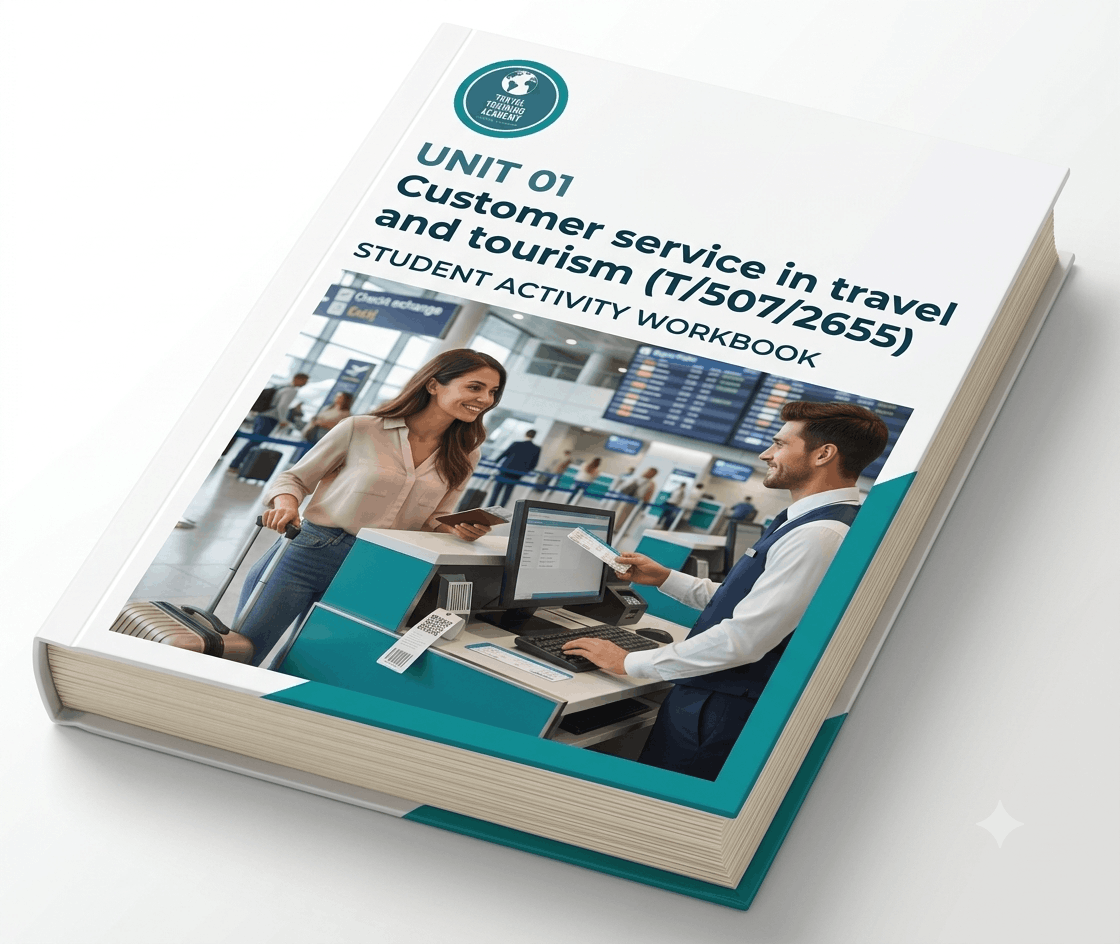
£49 once. Then it's yours.
Buy it once and your college or school owns a perpetual licence. That means:
✓ Photocopy it as many times as you like.
Every learner, every cohort, every year
✓ No renewal date.
No annual licence. No subscription
✓ No per-student fee.
Thirty learners or three hundred, same price
✓ Share it across your department
Every lecturer teaching the unit
✓ Edit it.
You get the Word file, so change the examples, cut a chapter, add your local employers
The arithmetic, if it helps
Work out what you'd normally pay for a class set of textbooks, then multiply it by the number of cohorts you'll teach before the edition changes. Then compare that with £49
Or price it in your own time: if building this from scratch would take you thirty hours (and it took me considerably longer than that) £49 buys the thirty hours back.
Or price it in your own time: if building this from scratch would take you thirty hours (and it took me considerably longer than that) £49 buys the thirty hours back.
Designed specifically for photocopying
-
Every page is black and white by design
-
No colour blocks that turn into grey mud when you photocopy
-
No pale tinted panels that disappear when you photocopy
-
No background images that eat toner and legibility at the same time.
-
Body text is set in a clean sans-serif at a size your learners can actually read.
-
Fully accessible
The learning design, since you'll want to know
Write your awesome label here.
Write your awesome label here.
What's inside?
Ten chapters, 159 pages.
Read Chapter 1 before you spend anything
Frequently asked questions
Does this replace my scheme of work?
No. It supplements what you already teach. There's no scheme of work, no lesson plans and no assessment briefs — it's the activity bank that sits alongside them.
Is the workbook endorsed by NCFE?
No, and we say so in the front of the book. It's written to the published Unit 01 content, but the specification is the only authoritative statement of what the unit requires, and where the two differ the specification wins.
Can I edit the workbook?
You get the Word file. Change the examples, swap our fictional hotel for a real one down the road, cut what you don't need.
Can I share it with the lecturer next door?
Within your college or school, yes — that's what the licence is for. It doesn't extend to other institutions or to putting the file on a public website.
Do I need to buy it again next year?
No. One payment £49, and the licence doesn't expire.
What about learners who need larger print?
It's a Word file with proper styles, so you can increase the body text size and reprint. It's also set in a sans-serif face at a readable size to begin with.
Is there an answer book?
Yes — a 38-page lecturer's answer book covering every activity and self-check question, with model answers, what to look for and the wrong turn most groups take first.
Separate 38-page lecturer's answer book included FREE
Covering every activity and self-check question, with model answers included
Write your awesome label here.
£49. One payment. Unlimited copies, forever.
Write your awesome label here.

hello@traveltrainingacademy.org